
%201.svg)
%201.svg)
The hidden cost of the walk
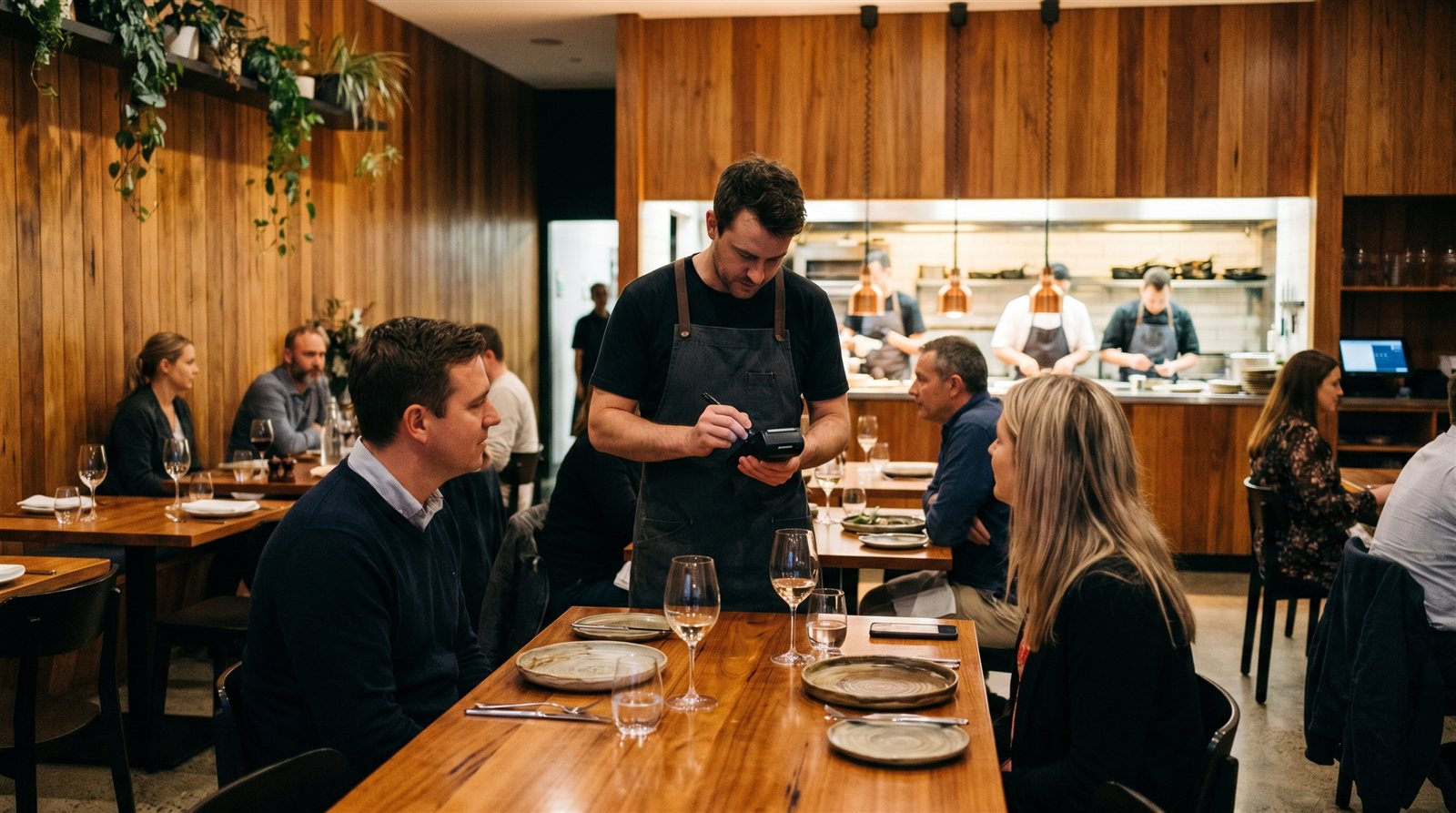
In a terminal-only restaurant, every order is taken twice — once on the pad, once into the POS. That double handling costs time and introduces errors: the scribbled 'no onion' that never made it into the system is a comped dish and an unhappy table.
What handhelds change
- Orders fire instantly. The kitchen sees the order as it's taken at the table, not after the waiter's next trip past the terminal. Entrées land sooner; turns tighten.
- Modifiers are captured correctly. Allergy flags and special requests are tapped, not scrawled — and the kitchen display shows them exactly as entered.
- Payment happens at the table. Card never leaves the guest's sight, the bill splits on the spot, and the tip prompt appears at the natural moment.
- Staff stay on the floor. Less shuttling means more sections per waiter or more attention per table — your call, but now it's a choice.
Rolling handhelds out well
- Start with your largest section at your busiest service and compare docket times for a week.
- Keep one fixed terminal as the anchor station for cash, refunds and end-of-day.
- Train for eye contact first, screen second — the device should disappear into service, not dominate it.
On Payflo
Payflo Go is a handheld POS and payment terminal in one — 4G and Wi-Fi, with a built-in printer option — for $550 owned outright, on plans from free with no lock-in.

About the author
Sarah is dedicated to helping restaurants optimise their booking processes and enhance guest experiences through our integrated POS solutions.


.png)
.png)